Reliable inspection of butt welds in PE piping systems
The quality of a weld joint is crucial when fabricating a butt weld (also known as a butt weld) in a PE piping system. A strong and reliable weld prevents leaks, failure costs and safety risks.
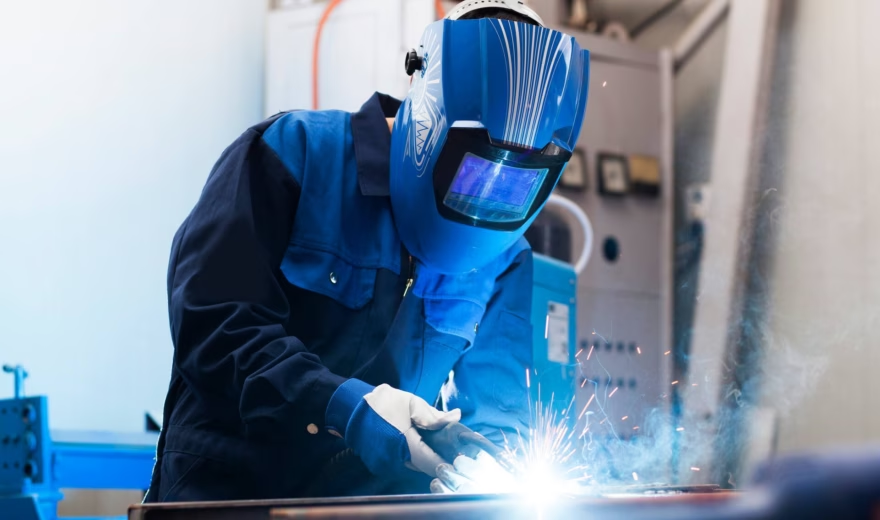
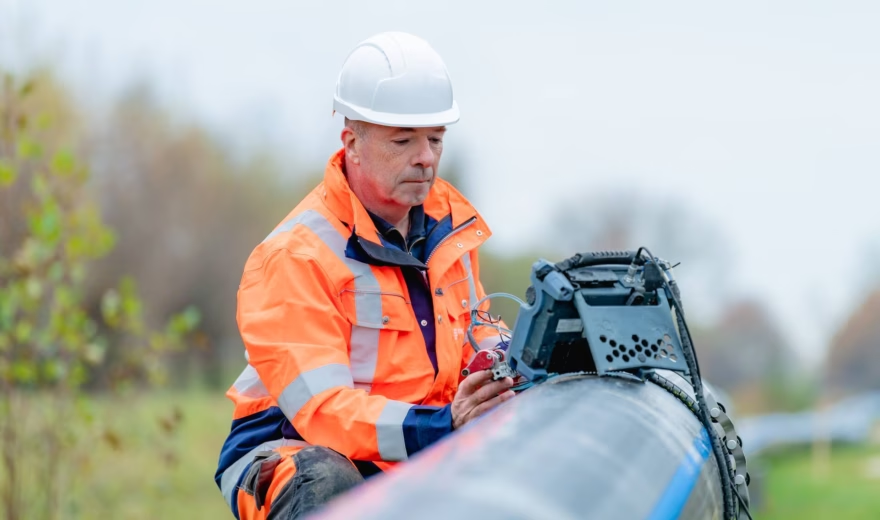
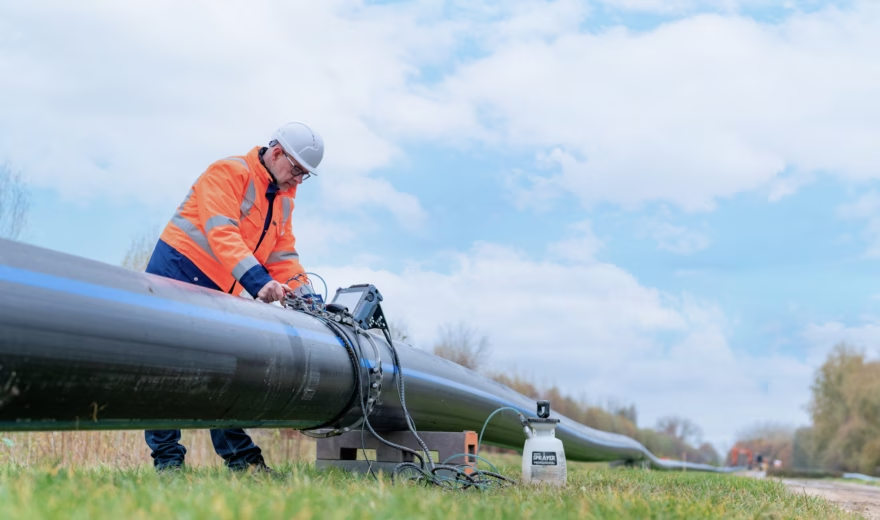
Normec helps you ensure the quality of PE butt welds with independent inspections and laboratory testing. Our specialists check the entire process: from preparation and welding parameters to inspection of the final weld.
Among other things, we perform the following checks:
- Inspection of preparations and welding parameters before the welding process
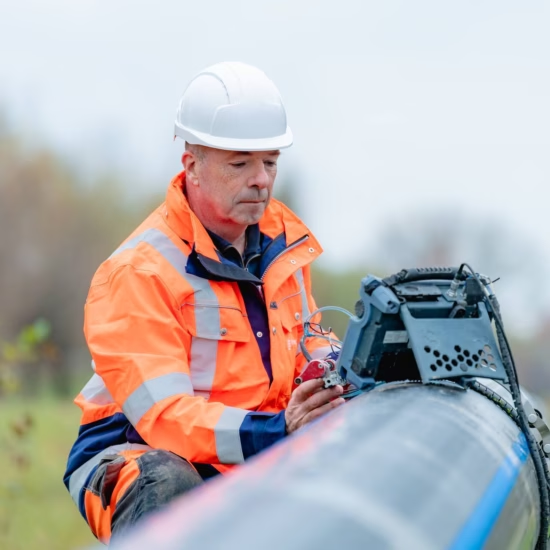
- Inspection during and after the welding process on site
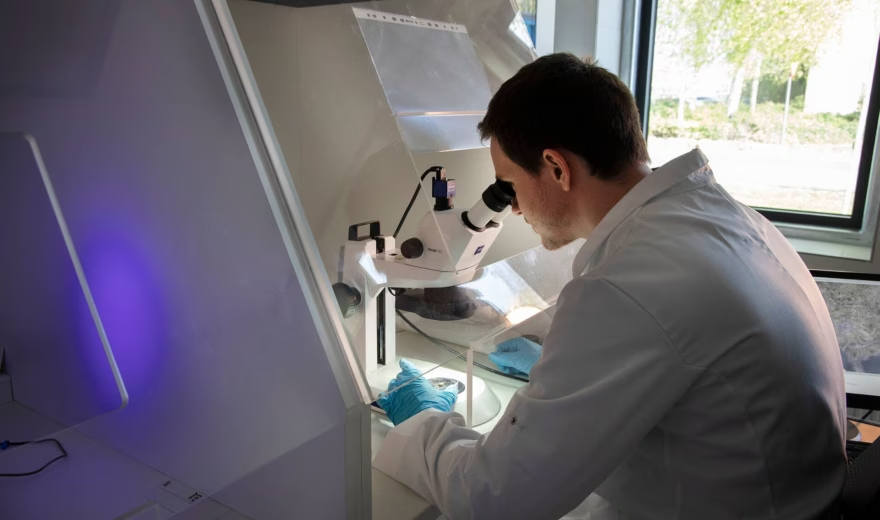
- Visual examination of test welds and field welds on site and in our laboratory
- Non-destructive examination on site and in our laboratory
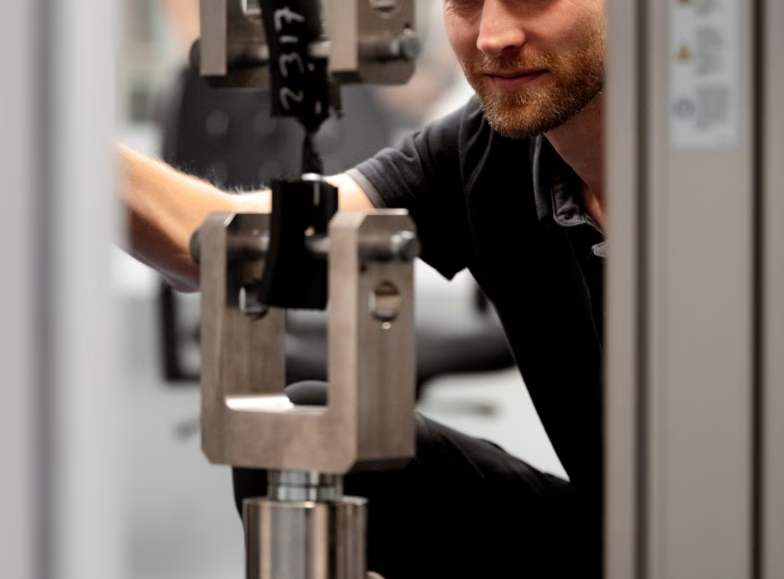
- Destructive examination of test welds and field welds in our laboratory
- Ultrasonic ToFD examination of field welds on site.
This gives you insight into the quality of your welded joints and ensures that they meet the applicable standards.
Testing butt welds
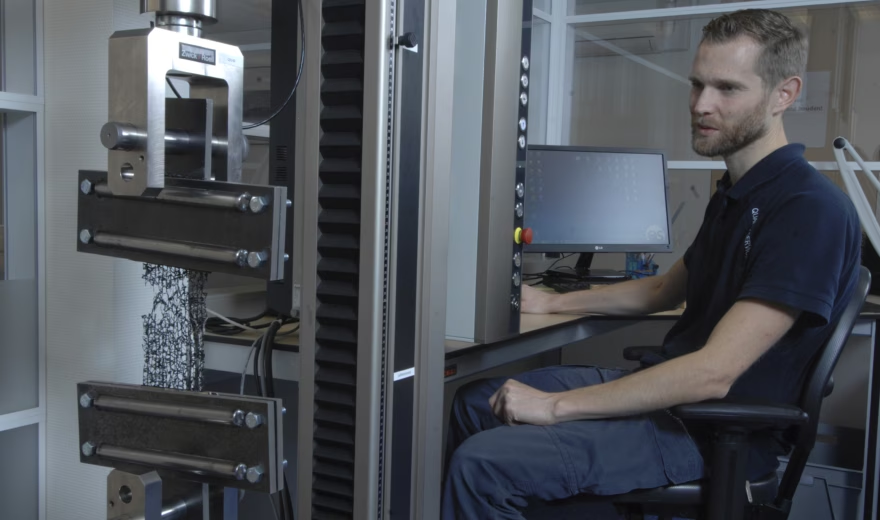
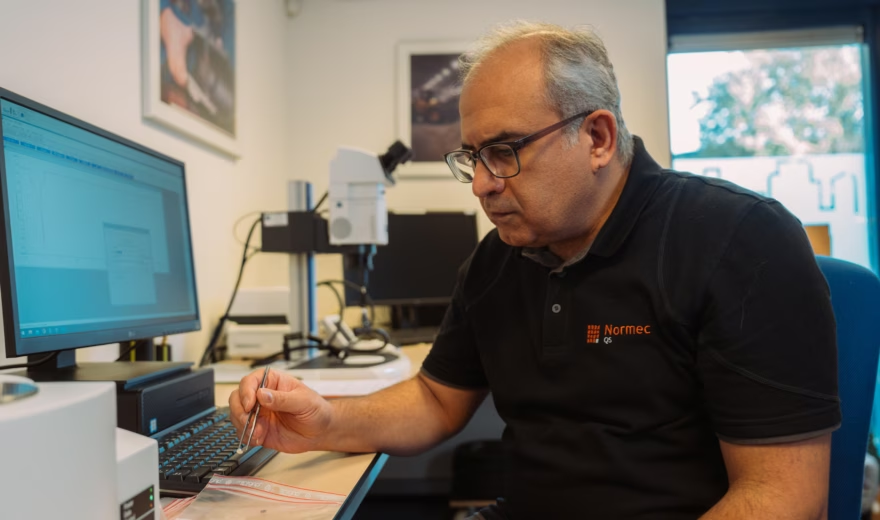
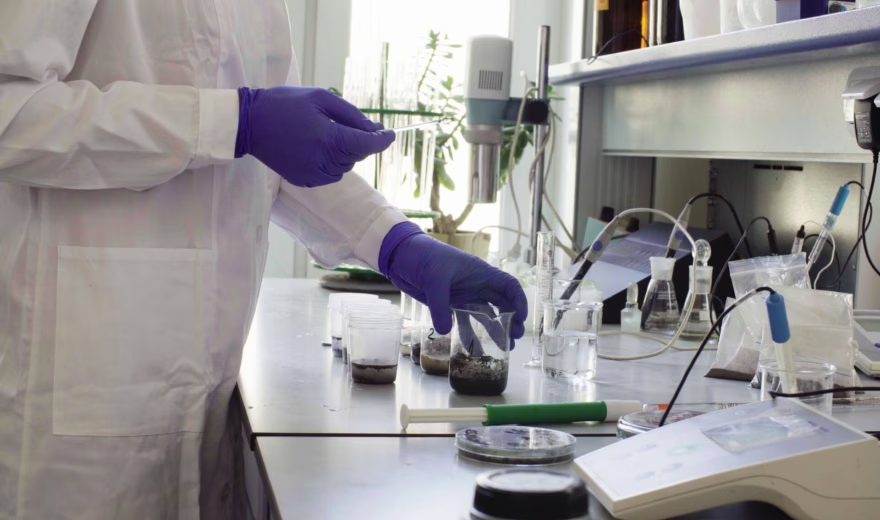
In our in-house laboratory, we have accredited facilities for the preparation and testing of butt welds according to the applicable standards. We can perform various tests on both representative test welds and field welds, including:
- Tensile tests PE butt welds - according to NEN 7200
- Tensile tests PE butt welds < 90 mm - according to ISO 527-1 and ISO 527-2
- Tensile tests PE butt welds > 90 mm - according to ISO 13953
Combining these tests with on-site inspections gives you a complete picture of the quality of the welding process and the final joint.
Testing to the breaking point
With destructive testing, we check whether butt welds are strong enough and meet the specified requirements. Testing a welded joint to the breaking point provides a clear picture of its actual strength and quality.
This means for you:
- You know for sure that your welded joints meet the applicable standards
- You prevent unexpected failures or leaks in piping systems
- You gain insight into the quality of the welding process
- You can identify and correct risks early on
- You strengthen the reliability and safety of your infrastructure
In addition to destructive testing, we also offer non-destructive testing (NDT) of butt welds, for example via visual inspection and ultrasonic ToFD testing.
Years of experience from Normec
With years of experience in inspection and material testing, Normec is a reliable partner for testing PE welded joints. Our specialists combine practical experience with in-depth knowledge of international standards.
Our strength:
- Years of experience and specialist knowledge
- Flexible scheduling of inspections, testing and training
- From testing to certification: one partner for the entire process
- Active role in standardization and knowledge development within the industry
The future of your piping systems
Reliable welded joints are the basis of durable and safe PE piping systems. Normec supports you with independent research, clear reports and expert advice. So you can build safe and future-proof infrastructure with confidence.
Want to know more about destructive testing of butt welds?
You might also be interested in these services
Frequently Asked Questions
-
In destructive testing, a welded joint is tested until it breaks. This reveals whether the weld is strong enough and meets the required standards.
-
In destructive testing, the weld is physically stressed to the breaking point. In non-destructive testing, such as visual inspection or ultrasonic testing, the weld remains intact.
-
Destructive testing is often used in quality control of test welds, validation of welding procedures or when there is doubt about the quality of a welded joint.
-
Standards commonly used include NEN 7200, ISO 527-1, ISO 527-2 and ISO 13953.
-
Yes. Both trial welds and field welds can be prepared and tested in the laboratory to assess the quality of the welding process.
-
Yes. In addition to laboratory testing, we also perform on-site inspections and non-destructive testing.