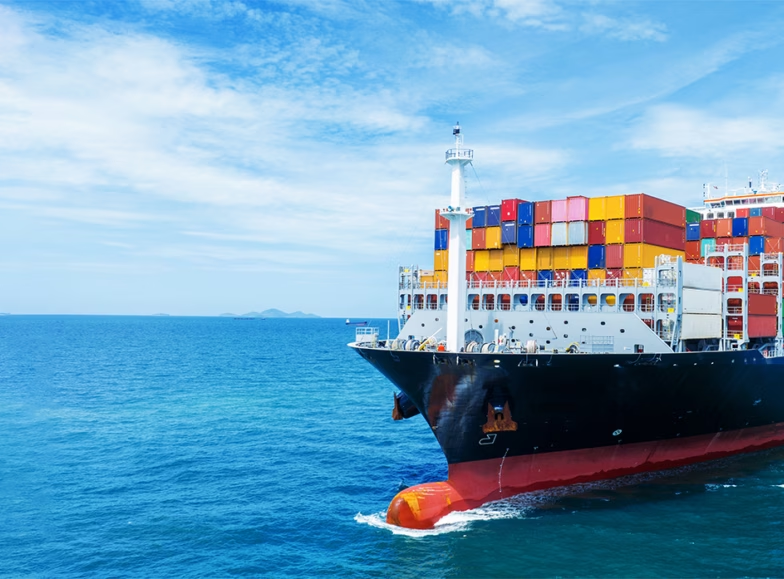
FuelEU Maritime compliance for shipping
FuelEU Maritime is part of the European Fit for 55 package and entered into force on 1 January 2025. The regulation aims to gradually reduce the greenhouse gas intensity (GHG intensity) of energy used by ships. In doing so, the European Union encourages the use of renewable and low-carbon fuels in shipping, with the goal of achieving climate neutrality by 2050.
FuelEU Maritime considers the full well-to-wake fuel lifecycle. This means that fuel production, transport and onboard use are all included in the emissions calculation.
The regulation applies to ships larger than 5,000 GT that transport passengers or cargo and call at EU or EEA ports, regardless of the ship’s flag.
The scope includes:
- EU Member States (EU27)
- EEA countries
- EU outermost regions such as the Azores, Madeira and the Canary Islands
The following ships are exempt:
- Warships and naval vessels
- Fishing and fish-processing vessels
- Wooden ships of primitive design
- Non-mechanically propelled ships
- Government ships used for non-commercial purposes
For Norway and Iceland, a special situation currently applies. Because FuelEU is not yet fully integrated into the EEA agreement, their ports are temporarily treated as ports of third countries.
This means, among other things:
- Voyages between EU ports and Norway or Iceland: 50% of energy use counts under FuelEU
- Voyages within Norway or within Iceland are fully exempt
Key requirements of FuelEU Maritime
FuelEU Maritime aims to reduce emissions in the shipping sector by encouraging the use of renewable and low-carbon fuels.
The regulation includes two core measures:
- Limits on the GHG intensity of fuels used by ships
- Mandatory On-shore Power Supply (OPS) or zero-emission technology at berth for container and passenger ships from 2030
GHG intensity is measured in grams CO₂ equivalent per megajoule of energy (gCO₂e/MJ).
The reference value is 91.16 gCO₂e/MJ. The first target value is 89.34 gCO₂e/MJ. These limits will be tightened every five years, from a 2% reduction in 2025 to an 80% reduction in 2050.
The regulation also promotes alternative fuels such as:
- Biofuels
- Hydrogen
- Ammonia
- RFNBOs (e-fuels)
Wind-assisted propulsion is also encouraged through a reward factor (Fwind) depending on installed wind power.
Pooling, banking and borrowing
FuelEU Maritime offers several flexibility mechanisms that allow operators to manage compliance.
Pooling
Ships, even from different companies, can combine their compliance balances. A surplus from one ship can compensate for a deficit from another.
Banking
Operators can carry forward a compliance surplus to future reporting periods.
Borrowing
Ships can temporarily use compliance credits from a future period to meet current obligations.
Specific conditions apply for pooling:
- Pooling must be registered in the FuelEU database
- A ship may participate in only one pool per reporting period
- The pool must have a positive compliance balance
- All participants must confirm the verifier and pool details
How Normec Verifavia helps you
FuelEU Maritime introduces new obligations for monitoring, reporting and verification. Normec Verifavia supports shipowners and operators with independent verification and practical compliance guidance.
Digital integration and automation
Our systems support automation and API integrations, enabling more efficient and accurate reporting.
Efficient and reliable process
With a structured approach, we help you meet deadlines and reduce administrative burden.
Objective expertise
As an independent verifier, we provide transparent assessments fully aligned with European regulations.
Stakeholder confidence
Verified emissions data strengthens trust among customers, partners and regulators.
What does this mean in practice?
- You gain insight into the GHG intensity of your fuel consumption
- You avoid compliance deficits and potential FuelEU penalties
- You can manage compliance flexibly through pooling or banking
- You prepare your fleet for future emissions reductions
- You strengthen your sustainability strategy towards customers and regulators
Sustainable fuels in shipping
FuelEU Maritime encourages the use of Renewable Fuels of Non-Biological Origin (RFNBOs) such as:
- e-diesel
- e-methanol
- e-LNG
- e-hydrogen
- e-ammonia
- e-LPG
- e-DME
If RFNBOs account for less than 1% of total maritime energy use in 2031, a mandatory target of 2% will be introduced from 2034. RFNBO fuels also benefit from a 50% GHG reduction factor in compliance calculations.
There are also specific derogations, for example for:
- Ice-class ships until 31 December 2034
- Certain container transshipment ports
- Passenger routes between small islands and the mainland
- Specific international public service obligations (PSO)
Would you like to know more about FuelEU Maritime?
Frequently asked questions
-
The regulation applies from 1 January 2025 to ships calling at EU or EEA ports.
-
All ships larger than 5,000 GT transporting passengers or cargo and calling at EU ports fall under the regulation.
-
GHG intensity indicates how many greenhouse gas emissions are produced per unit of energy used by a ship.
-
Pooling allows compliance surpluses from different ships to be combined so that deficits elsewhere can be compensated.
-
A DoC confirms that a ship complies with FuelEU requirements and must be kept on board.
-
Financial penalties may be imposed by the competent authority in cases of non-compliance.
-
No. Compliance is calculated at company level, meaning performance across the fleet can be balanced. A surplus from one ship can compensate for a deficit from another.
-
The calculation is based on well-to-wake emissions, including emissions from fuel production, transport and onboard use. These emissions are multiplied by energy consumption and compared with annual target values that start from 2025 onwards and become stringent at interval of every subsequent 5 years .
-
When a ship uses multiple fuels, fuels with lower GHG emissions are prioritized in the calculation, giving them a larger positive impact on the ship's overall GHG intensity.
-
Yes. FuelEU Maritime allows pooling agreements where companies combine the compliance balances of their ships. A surplus at one company can compensate for a deficit at another.
-
Operators can prepare by:
- Monitoring fleet fuel consumption accurately
- Evaluating certified biofuels
- Preparing new ships for alternative fuels such as methanol, ammonia or hydrogen
- Investigating wind-assisted propulsion options
- Exploring compliance strategies such as pooling or redistribution
-
A ship can only participate in one pooling arrangement per compliance period.
- Ships with a positive compliance balance can choose pooling, banking or a combination of both.
- Ships with a negative compliance balance can use pooling or borrowing, but not both simultaneously. When borrowing, the ship must repay 10% additional credits the following year.
-
In that case, the selling party must submit a partial emissions report in THETIS up to the date of sale. The new owner then becomes responsible for compliance for the remainder of the year, including any borrowed credits. Any previous compliance balances are settled between buyer and seller. Final responsibility for penalties lies with the company managing the ship at the end of the reporting period.