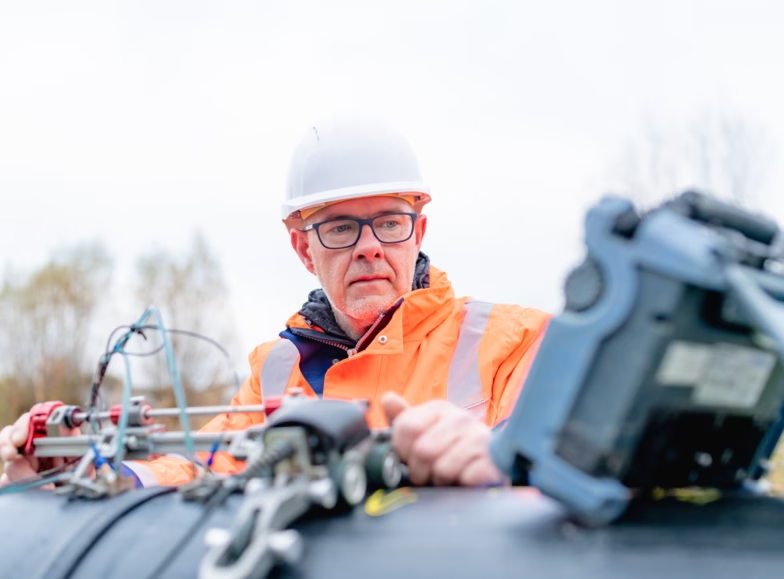
How do we inspect the welding process and welds?
Our inspectors check, among other things:
- The qualifications of welders and welding equipment
- Welding parameters, setup and execution of the welding process
- Materials used
- Visual quality of the welds
- Non-destructive testing (ultrasonic)
- Destructive laboratory examination
All findings are recorded in a clear report, including declaration of conformity.
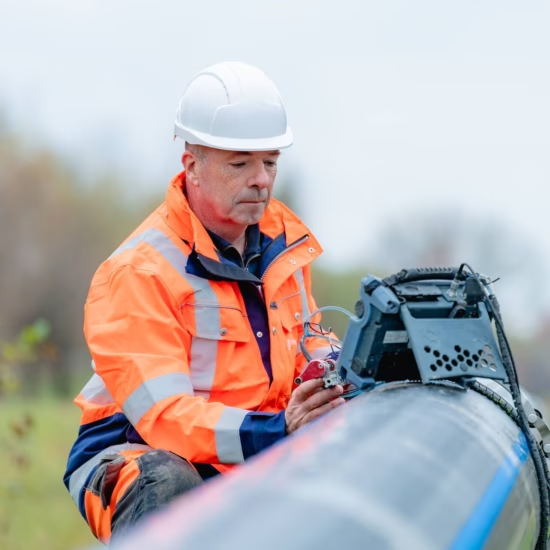
Independent and accredited
We are accredited by the Dutch Accreditation Council.
The external supervision guarantees that we work completely independently and meet internationally recognized
NEN-EN-ISO/IEC standards. With accredited inspections, ultrasonic testing and destructive laboratory testing,
we offer a complete and independent service: from inspection to reporting.
The inspection process step by step
Before starting the welding process, our inspector checks whether the conditions are suitable for making high-quality PE welds. We assess the welding parameters, equipment set-up and process execution.
During and after welding, we inspect:
- The quality of applied PE materials
- The welds visually
- The welds with ultrasonic examination (ToFD in the case of mirror welding and PAUT in the case of electromofusion welding)
- Representative test welds via destructive testing in our accredited laboratory.
In the case of mirror welding, we work according to NEN 7200:2017.
For electrofusion welding, we apply NTA 8828:2018 or VM102, possibly supplemented by additional regulations from the manufacturer or client. Upon request, we perform inspections in accordance with DVS 2207.
With our inspections:
- Reduce the risk of failure costs and leaks.
- Demonstrably guarantee the quality of your pipeline network
- Meet applicable standards and project requirements
- Increase the reliability and lifespan of your infrastructure
- Work with independently tested quality
You combine technical assurance with demonstrable compliance.
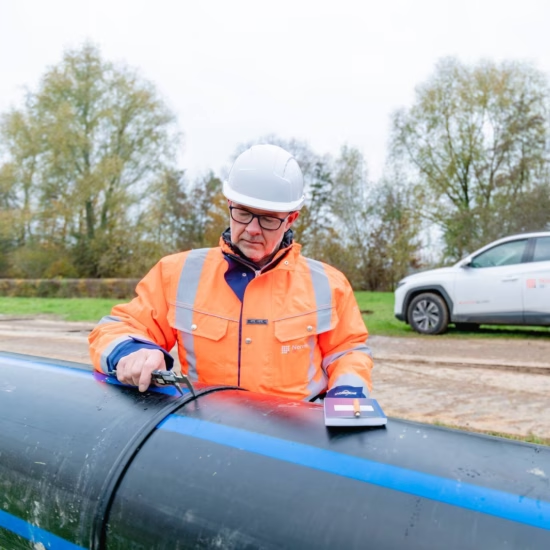
Future-proof networks
With professional weld inspection, you invest in safe, sustainable and reliable water and gas networks. You prevent failures, limit risks and demonstrate that you work to the highest quality standards.
We think along with you, plan flexibly and provide an independent and careful inspection process: before, during and after your work.
Want to know more about piping inspection?
Frequently asked questions about PE piping inspection
-
That depends on project and contract requirements. Many infrastructure projects require demonstrable quality assurance.
-
Non-destructive testing assesses the weld without damaging it. Destructive testing tests test welds in the laboratory to determine strength and quality.
-
Among others, NEN 7200:2017 for mirror welding and NTA 8828:2018 or VM102 for electrofusion welding.
-
Yes, upon request, inspectors can also conduct unannounced inspections.
-
Yes, we provide training to become a certified PE welder and welding supervisor.
-
Contact us. We'll discuss your project and tailor the process.