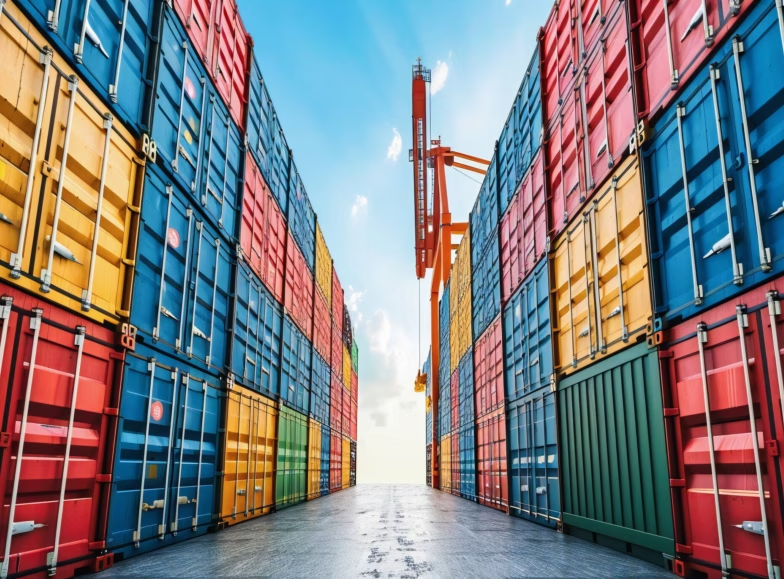
What is the Sea Cargo Charter?
The Sea Cargo Charter is a global initiative that helps charterers align their shipping activities with the decarbonization targets of the International Maritime Organization (IMO).
The framework supports companies in measuring and reporting the climate performance of their chartering activities. This promotes transparency and accountability within the maritime sector.
The Sea Cargo Charter contributes to the IMO’s goal of reducing greenhouse gas emissions from international shipping by at least 50% by 2050. Normec Verifavia supports organizations with independent calculation and verification of climate alignment scores.
Key features
The Sea Cargo Charter provides a standardized framework for assessing the climate impact of charter activities.
Climate Alignment Assessment
The charter assesses how well chartering activities align with IMO decarbonization pathways.
Transparency and accountability
Organizations must publicly report their climate alignment scores.
Practical implementation
The required data is generally available through IMO DCS or EU MRV reporting.
Defined scope
The charter applies to bulk chartering activities for ships larger than 5,000 GT, including:
- Dry bulk carriers
- Chemical tankers
- Oil tankers
- Gas tankers (for liquefied gas)
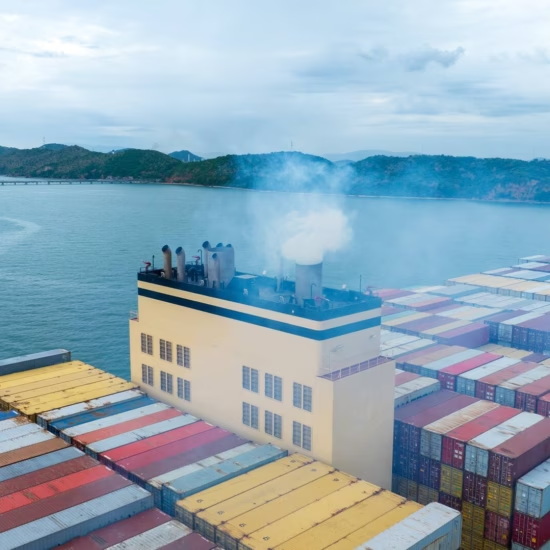
What does climate alignment mean?
The Sea Cargo Charter assesses the emissions performance of chartering activities at two levels.
Voyage basis
The carbon intensity of individual voyages is compared with the IMO decarbonization trajectory.
Operational indicators are used for this, such as:
- EEOI (Energy Efficiency Operational Indicator)
This measures actual operational performance rather than only the ship’s design performance.
Annual activity basis
In addition, the weighted average of all voyages within a category over a year is assessed. This provides insight into the overall climate impact of charter activities.
Decarbonization trajectory
The assessment framework is based on trajectories specific to ship type and size, ensuring that performance remains consistent and comparable.
What is expected from signatories?
Organizations participating in the Sea Cargo Charter must:
- Collect relevant operational data according to IMO DCS or EU MRV
- Calculate the climate alignment
- Report their results annually to the Sea Cargo Charter Secretariat
- Publish their scores in relevant institutional reports
Normec Verifavia can support organizations with accurate calculations and independent verification.
How Normec Verifavia supports you
Experience with maritime emissions data
We collect and analyze data on fuel consumption, CO₂ emissions, cargo and transport work for thousands of ships.
Independent calculations
As an independent third party, we provide objective calculations and reporting for Sea Cargo Charter signatories.
Technical expertise and scalability
With advanced tools and experienced auditors, we can efficiently process large datasets.
Cooperation with flag states
We work with major flag states such as Panama and Liberia and can act as a Recognized Organization (RO) for providing data to signatories.
The verification process
-
1.
Data Collection
Collect relevant data such as fuel consumption, CO₂ emissions, cargo information and transport work according to IMO or EU MRV regulations.
-
2.
Climate Alignment Calculation
Normec Verifavia performs independent and accredited calculations to determine climate alignment.
-
3.
Annual Reporting
Climate alignment scores are submitted annually to the Sea Cargo Charter Secretariat.
-
4.
Result Publication
The results are published in relevant reports to promote transparency and sustainability.
Would you like to know more about the Sea Cargo Charter?
Frequently asked questions
-
The Sea Cargo Charter is an international initiative that helps charterers assess and report their shipping activities in line with IMO decarbonization targets.
-
The charter is intended for organizations involved in bulk chartering of ships, such as trading houses, energy companies and commodity companies.
-
Reporting uses existing datasets such as IMO DCS and EU MRV, including fuel consumption, CO₂ emissions, cargo and transport work.
-
Normec Verifavia can support organizations with data analysis, emissions calculations and independent verification of Sea Cargo Charter reports.
-
Independent verification ensures that climate alignment calculations are accurate, reliable and transparent.
-
The voyage alignment score compares the carbon intensity of a specific voyage (expressed in grams of CO₂ per tonne-mile) with the required emissions intensity according to the IMO decarbonization trajectory for the relevant ship type and size at that time.
The annual activity alignment score is calculated as a weighted average of all voyages within a category, taking into account the transport work performed per voyage. -
The Sea Cargo Charter website provides various resources, including:
- Extensive FAQs
- Guidelines and documentation
- Webinars and explanatory materials
Normec Verifavia can also support organizations with expert advice and guidance during implementation and reporting.
-
How are data privacy and company data security ensured?
The Sea Cargo Charter applies strict data privacy and security protocols.- Data is anonymized and aggregated before reporting
- Only authorized persons have access to sensitive information
This ensures that company data remains protected while enabling transparent reporting.
-
Currently, there are no direct financial penalties for non-compliance. However, organizations may face:
- Reputational risks
- Reduced credibility with stakeholders
- Possible exclusion from certain chartering opportunities
Ready to participate in the Sea Cargo Charter?
Contact Normec Verifavia to receive support in understanding the requirements, collecting data and performing accurate emissions calculations. Together, we can contribute to a more sustainable future for the maritime sector.