
Emission reduction in the maritime sector
The maritime sector is exploring various ways to reduce greenhouse gas (GHG) emissions. Optimisations in logistics, digitalisation, hydrodynamics, engine efficiency and carbon capture can together achieve around 30% emission reduction. However, the largest reduction potential lies in the transition to low- or zero-carbon fuels.
Shipping companies, logistics providers and fuel producers increasingly offer programmes that allow customers to support the use of low carbon fuels. In these programmes, customers purchase the environmental attributes associated with the use of sustainable fuels.
Normec Verifavia provides LCF Program Audits and Insetting Audits to verify whether these programmes are reliable and whether the claimed emission reductions are calculated correctly and transparently.
How the “book and claim” model works
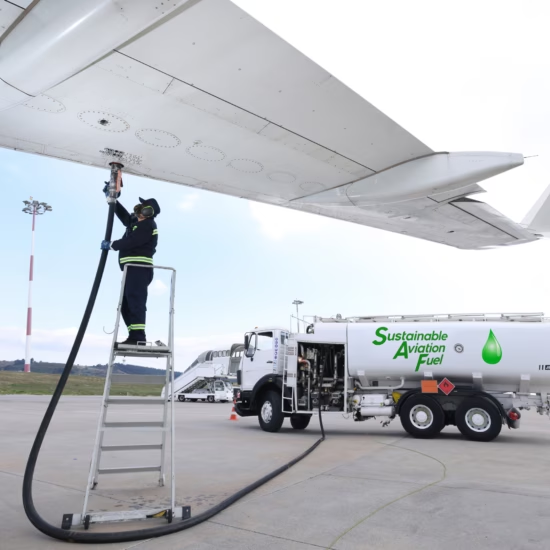
Many low carbon fuel programmes use a book-and-claim chain of custody model. This model separates the physical delivery of sustainable fuels from the environmental benefits associated with them.
An example:
- A biofuel producer in Rotterdam produces sustainable fuel
- The environmental attributes of this fuel are registered (“book”)
- A shipping company operating elsewhere can claim these benefits (“claim”)
Although the ship may use conventional fuel, the company can support the emission reduction of sustainable fuel through the programme.
To ensure reliability, tracking and registry systems are often used. Some organisations manage these internally, while others use independent registry systems such as 123Carbon.
These registry systems ensure:
- Transparent registration of claims
- Verifiable transactions
- Prevention of double claiming
Our approach
Normec Verifavia helps organisations independently verify their low carbon fuel programmes and insetting initiatives.
Our audits provide, among other things:
Greater credibility
Independent verification strengthens trust among customers, partners and regulators.
Stronger sustainability position
Companies can position themselves as leaders in sustainable transport solutions.
Responsible emission claims
The audit confirms that emission reductions are calculated and reported correctly.
What does this mean in practice?
- You receive independent verification of emission claims
- You avoid risks of double counting or incorrect claims
- You strengthen the credibility of your sustainability programme
- You improve compliance with international sustainable logistics frameworks
- You build trust with customers and stakeholders
Normec Verifavia’s audit process
-
1.
Kick-off meeting
We discuss the objectives of your LCF programme and the verification needs.
-
2.
Data collection and analysis
We collect relevant data about the programme structure, fuel sources and emission reduction calculations.
-
3.
Methodology and data review
Our auditors review the methodology, data sources and emission models for accuracy and completeness.
-
4.
Programme management assessment
We assess the programme management processes, including controls to prevent double claims.
-
5.
Verification of individual
Individual claims through certificates, declarations are reviewed to confirm that they represent the correct emission reductions.
-
6.
Assurance report
After successful completion, the organisation receives an independent assurance report confirming the reliability of the programme.
Sustainable fuel programmes
Low carbon fuel programmes and insetting initiatives play an important role in the energy transition of the transport and logistics sector.
Because emission reductions are often traded through complex systems of attributes and certificates, independent verification is essential to ensure transparency and reliability.
By having programmes audited according to recognised frameworks, such as the Market Based Measures Framework of Smart Freight Centre, organisations can demonstrate that their claims are consistent, verifiable and credible.
Would you like to know more about Low Carbon Fuel?
You might also be interested in these services






Frequently asked questions about low carbon fuel (LCF)
-
An LCF program audit is an independent review of a program that assigns the environmental attributes of low carbon fuels to transportation operations.
-
An insetting audit verifies that emission reductions within a supply chain have been correctly calculated and allocated to participating organizations.
-
The book-and-claim model decouples the physical delivery of renewable fuels from the environmental attributes associated with them. This allows organizations to support emissions reductions without physically using the fuel in their own transportation operations.
-
Verification by an independent party prevents duplicate claims, increases transparency and strengthens trust between clients and stakeholders.
-
Normec Verifavia uses recognized standards and guidelines for greenhouse gas verification, such as the ISO 14064 series and the GLEC Framework. We also use sector-specific guidelines from organizations such as the International Maritime Organization (IMO) and frameworks such as Smart Freight Centre's (SFC) Market Based Measures Framework for program validation.
Where relevant, we also use assurance protocols of registry systems and the Normec Verifavia assurance protocol for voluntary verification services.
-
For verification, we need, among other things, the following
- Program documentation.
- Data on fuel sources and emission reductions
- Information on procedures for issuing claims or certificates
- Data on individual certificates issued within the program
This information allows our auditors to assess the accuracy and transparency of emission claims.
-
After the verification is complete, you will receive a verification report describing the verification process, findings and conclusions.
This report can be used to demonstrate program reliability to stakeholders and to support sustainability communications. In addition, you will receive verified certificates for each individual claim issued within the program.
-
Normec Verifavia does not develop programs itself, but can provide advice and guidance to help organizations design a program that is in line with industry best practices and meets verification requirements.
-
Work with fuel suppliers that demonstrate the sustainability of their products through recognized certification programs, such as:
- ISCC (International Sustainability & Carbon Certification)
- RSB (Roundtable on Sustainable Biomaterials).
These certifications help confirm that fuels meet sustainability and emission reduction criteria.