The usefulness and necessity of a comprehensive condition assessment of PVC pipes
There certainly is. A large proportion of underground PVC pipes are already quite old and are approaching the end of their technical service life in the coming years. This depends on many factors, such as the environment, as well as the quality of the pipes and how long they have been in the ground. Every year, failing pipes cause water waste and damage to infrastructure that leads to prohibitively expensive repairs. A shame, right?
Why is such a condition assessment so important? For pipeline owners and managers such as municipalities and water boards, it is very important to know the status of their pipelines in order to have a better understanding of the risks and therefore the costs. After all, what happens if cracks or fractures appear in a PVC pipeline due to aging, material degradation or heavy work, for example? Calamities! Both for the consumer, but also the unforeseen costs to repair such damage are incredibly high for pipe operators. Pipes can generally last longer than previously thought, however, a small number of critical spots can cause danger. Precisely those critical spots are important to identify and address by assessing risks and inspecting pipelines. Ultimately, pipeline owners save enormously on costs over the life of the pipeline, which can often be extended as a result. So, on the one hand, to prevent calamities and their consequences and, on the other hand, to reduce the cost of the pipeline over its total lifetime by extending its life.
By identifying the risks in time, inspecting the pipelines preventively and then examining them for material quality, you have a better grip on your pipeline network.
Joining forces
That's what happens during PVC pipeline condition assessments. HDM Pipelines, Acquaint and QS are working closely together on this specialized issue. They are doing this for the first time, and the start of this unique collaboration bodes well. Why? These independent parties complement each other well and each company has its own crucial role in the process. What is their joint strength? The big picture. Acquaint provides important data of the entire route and QS dives more in depth by performing material research. HDM translates all this data into concrete information. What is the actual quality of the pipeline network? The reliable results of the risk analysis, the inspection and the quality control are the added value for the customer.
Risk management
HDM Pipelines is a specialist in the field of pipelines and pipeline networks. First of all, they map out the risks of the PVC pipelines and give advice on which pipelines should be inspected first, but also which inspection techniques they can best use for that purpose. In this way, the customer immediately knows which pipes to zoom in on. On the basis of data from various open data sources, HDM can determine which discharge pipeline has the highest risk of failure and which mitigating measures should be taken to reduce the risk to an acceptable level. This ensures more effective and efficient management and maintenance of the pipeline network!
Inspection technology
Acquaint is an expert in the field of internal pressure pipe inspections in the drinking and wastewater sector. They have developed the smart Acquarius tool that can be deployed without excavation work and disruption of operations.
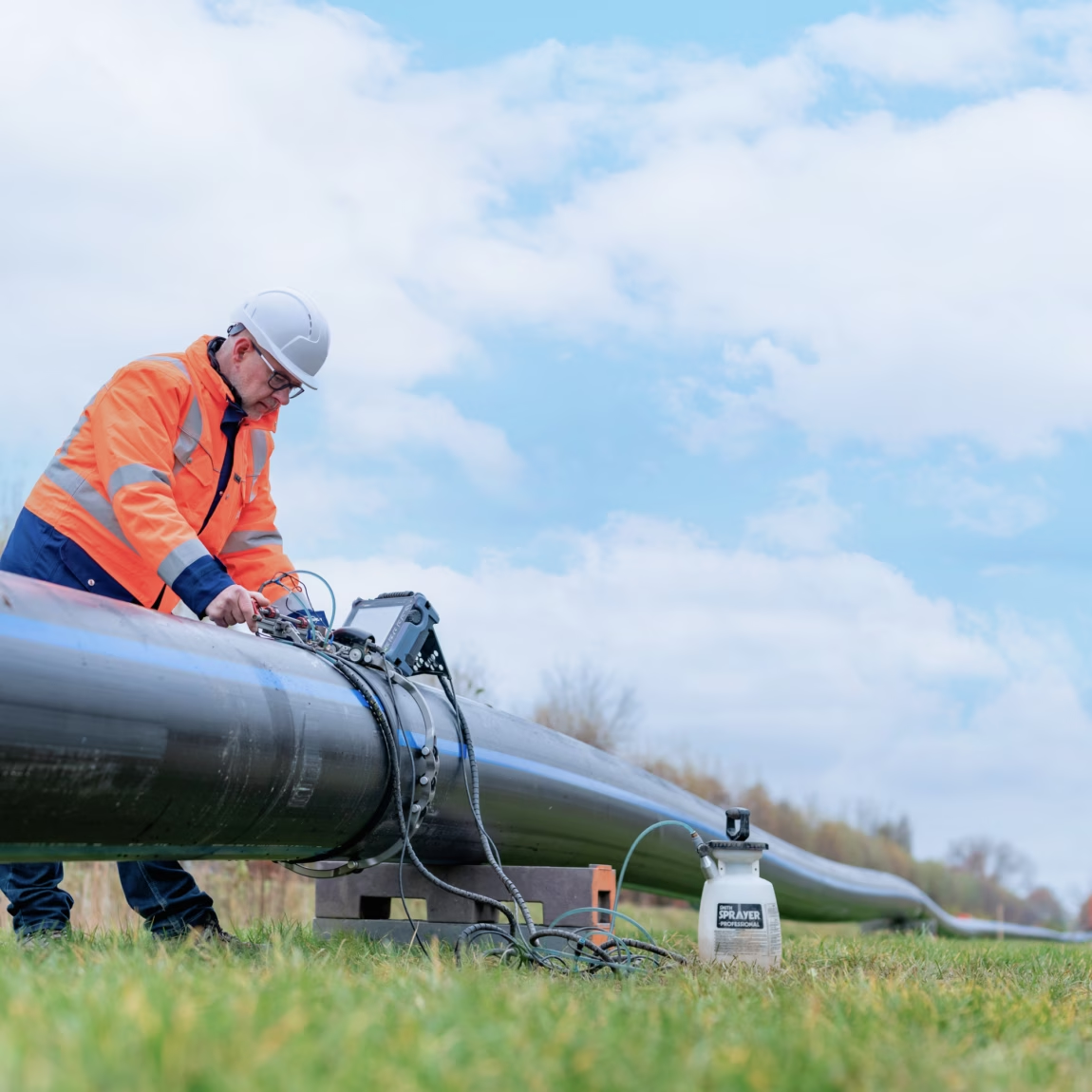
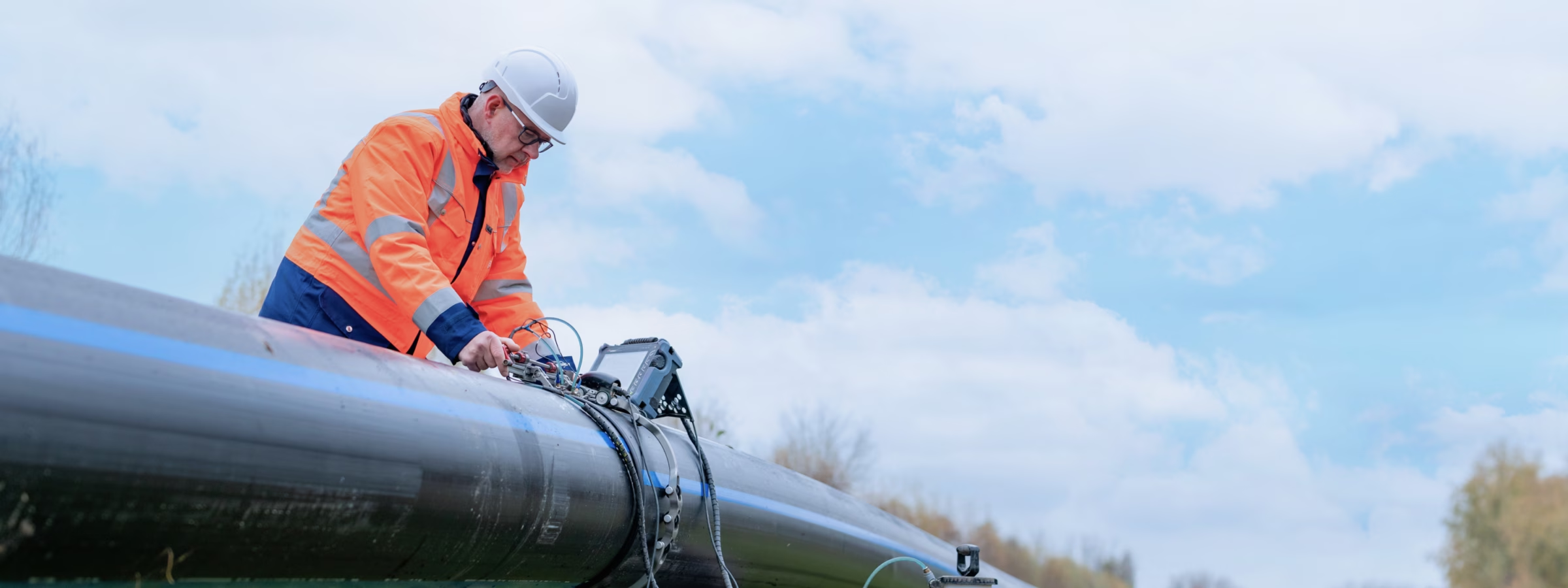
With its sensors, the Acquarius quickly identifies the condition of drinking and wastewater pipelines. And this can be done while a pipeline is still in operation. For example, it measures the healthy remaining wall thickness, deformation, ovality, location, and deviations in the joints of a PVC pipe. All of these failure mechanisms can lead to calamities, as well as any angular distortions. Thanks to its maneuverability, the Acquarius finds its way everywhere. If one pipe is inspected, Acquaint can use the data it receives as a result, in combination with other data, to predict the condition of other pipes without the need for inspection. Ultimately, then, the goal is not to inspect all pipes. An innovation that is in full swing.
Material testing
On average, a plastic pipe lasts about 25 to 50 years. But practice shows that these pipes often last (much) longer. And that is of interest to the pipeline manager. QS specializes in the quality control and material testing of these plastic piping systems. They have developed a practical, effective and scientifically based research method to determine the degree of aging. This research takes place in their own laboratory. After Acquaint performs the inspection, QS gets to work. Depending on the length of the pipe, one or more sections of plastic pipe are taken out of the ground and scrutinized. The quality of the material, strength, any micro-cracks and possible chemical attack are examined. The outcome of this examination including interpretation by a recognized long term behavior expert is recorded in a final report with a clear conclusion.
Result
Pipeline management without surprises! What are the benefits? Risks are reduced, the safety of the plastic pipelines increased, substantial cost savings through smart management and as pipeline manager you have 100% insight into your pipeline network.
All the data collected by the cooperation partners QS and Acquaint are used by HDM Pipelines for a residual life analysis of the entire pipeline route. This residual life approach is of great importance to pipeline owners if investment decisions need to be made in the (near) future. All in all, the combination of fieldwork, material research and the residual life approach to this pipeline enables the pipeline owner to take his pipeline management to a higher level. This fits seamlessly with asset management, which has become increasingly popular within these types of organizations in recent years.