

Accessibility links Skip to main content

Empowering consumers for the green transition: what businesses need to know

The Empowering Consumers for the Green Transition Directive (EU) 2024/825, also known as the ECGT or EmpCo Directive, introduces new rules governing sustainability claims made to consumers (B2C). The Directive amends the EU Unfair Commercial Practices Directive (UCPD) and expands the list of commercial practices considered unfair. For businesses, the key shift is towards more specific, evidence-based and verifiable sustainability communications.

Continue reading
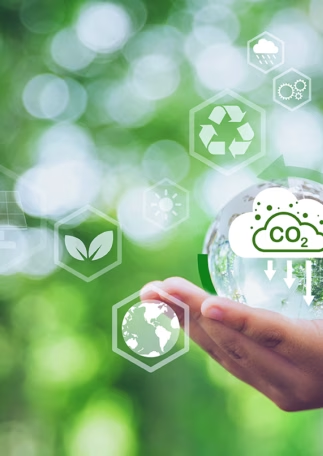
Hand holding a digital globe and sustainability icons against a green background

From broad to evidence-based claims 

Generic environmental claims such as “eco-friendly”, “green” or “sustainable” are now subject to much stricter requirements. In certain circumstances, these claims are prohibited unless the company can demonstrate the recognised environmental performance required to support them. 

More generally, B2C sustainability claims need to be specific, substantiated and verifiable. Businesses should be able to clearly demonstrate how a claim was established, what data supports it and what methodology was used, so that the claim can be independently checked against the underlying evidence. 

For example, instead of describing a product simply as “sustainable”, a company would make a more specific claim such as “this packaging contains 30% less virgin plastic than our previous packaging”—provided the claim can be substantiated and verified. 

In practice, businesses should be prepared to trace a claim back to its underlying data and explain it if challenged by a regulator, NGO or consumer organisation. 

Social claims are also regulated 

The Directive also addresses certain social claims and characteristics. This can include claims relating to working conditions, social responsibility and other social characteristics of a product or business. Examples could include claims such as: “Fair working conditions”, “Ethically produced”, “Fair wages paid to workers”, “Supports local communities”.

Businesses should therefore look beyond traditional “green claims” when reviewing their consumer-facing communications. Social and ethical claims should also be accurate, substantiated and verifiable, with evidence to support what is being communicated to consumers. 

Environmental label certification schemes 

The Directive also introduces stricter rules for environmental and sustainability labels. Environmental labels must be based either on a publicly established scheme, such as the EU Ecolabel, or on a certification scheme that meets the requirements set out in the Directive. 

Certification schemes are themselves subject to conditions, including requirements around transparency, accessibility and governance, as well as appropriate procedures for monitoring compliance. This means that businesses should not assume that an internally created sustainability logo, badge or label can simply be used to communicate environmental performance. 

Companies should therefore review the labels and certification schemes currently appearing on their products and marketing materials and confirm the basis on which they are being used. 

Legislative gaps

The new rules raise practical questions about how businesses should communicate increasingly detailed sustainability information to consumers. 

For example, how can a company move from a broad claim such as “sustainable food” to a more specific, data-driven claim such as “30% lower CO₂e emissions” when space on packaging is limited? And how should businesses deal with the use of colours, images and symbols—such as green colours, leaves or nature imagery—that may contribute to an overall environmental message? 

The overall impression created for the average consumer can be relevant. Businesses should therefore consider not only the wording of individual claims, but also the visual presentation and context in which those claims appear. 

What should businesses do now? 

Businesses should: 

  • Raise awareness among marketing, sales, PR, product and sustainability teams. 
  • Map existing claims across packaging, websites, advertising and social media. 
  • Identify potentially high-risk claims, particularly broad or absolute environmental statements. 
  • Connect each claim to its evidence, including the underlying data and methodology. 
  • Review environmental labels and certification schemes to confirm that they meet the applicable requirements. 
  • Review social and ethical claims alongside environmental claims. 
  • Assess the overall presentation, including wording, imagery, colours and symbols. 

Need your sustainability claims or certification scheme verified? 

Normec Verifavia is a leading assurance provider specialising in sustainability. Our verification and assurance services can help you assess whether your sustainability claims or certification scheme meet the requirements of the applicable regulations. 

Get in touch: [email protected] 

Do you want to create a safe and healthy work and living environment?

We test, inspect, and certify so that organizations can innovate safely, quickly, efficiently, and cost-effectively.

Request a quote

Fill out the form and we will contact you shortly.

Name
In which country would you like the service to be carried out?
Privacy Policy 

Contact us

Fill out the form and we will contact you shortly.

Name
In which country would you like assistance?
Privacy Policy 

Related news articles

A young green plant growing out of a hand against a natural background
15 Oct 2026

CBAM's New Rulebook

On 24 August 2026, the European Commission published new Guidance on CBAM verification and accreditation, addressed to verifiers and National Accreditation Bodies. The 141-page document sets out how the definitive verification and accreditation rules apply to CBAM goods imported into the EU from 1 January 2026 onward. It is currently available in English only; a French version will follow. For importers of steel, aluminium, cement, fertilizers, hydrogen, or electricity, this guidance determines whether a supplier’s actual emissions data can be used in a CBAM declaration, or whether the applicable default value plus its associated mark-up will apply instead.
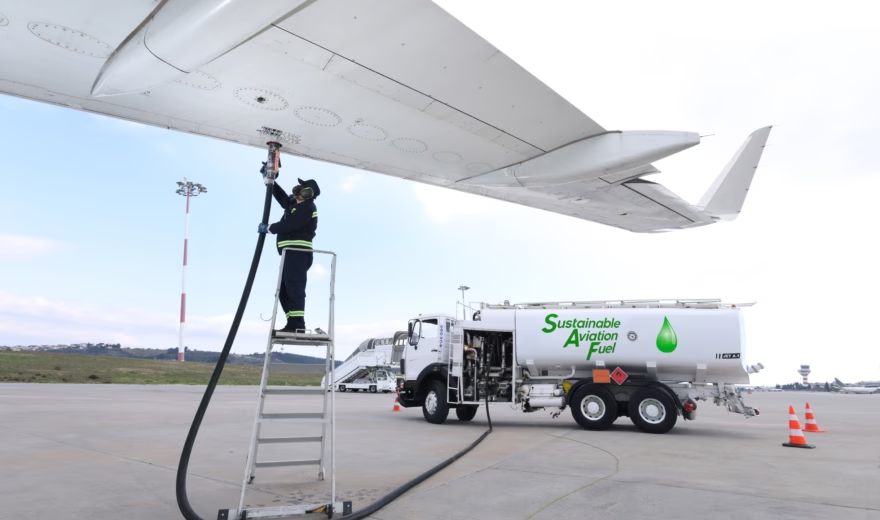
An airplane is being refueled with sustainable jet fuel on the airport tarmac.
01 Jul 2025

ReFuelEU aviation compliance in 2024: Verification coverage, challenges and upcoming operator requirements

ReFuelEU Aviation (Regulation 2023/2405) is the EU's bold initiative to decarbonize aviation by promoting greater use of sustainable aviation fuels (SAF) and reducing inefficient economic fueling. By 2024, 358 operators were subject to the ReFuelEU requirements, and Normec Verifavia independently verified 128 of them, accounting for a 35.8% market share. However, only 14 of the verified operators met the critical Article 5.1 requirement - at least 90% of their fuel refueling at Union airports. This gap highlights widespread data control and operational planning challenges. As penalties will be imposed for noncompliance in the coming year, early action, accurate reporting and effective verification practices are essential for meaningful compliance and progress toward greater use of sustainable aviation fuels.

07 Jan 2026

When Frameworks Enable Growth: Insights from Smart Freight Conversations

The freight and logistics sectors are evolving rapidly, driven by the need for transparency, credible emissions data, and measurable climate action. As part of this broader industry dialogue, Smart Freight Centre (SFC) recently featured Normec Verifavia in an episode of Smart Freight Conversations: The Leadership Series.

Glass globe with a sustainability icon on Earth against a green, natural background
15 Oct 2026

EU carbon removals framework advances toward certified purchases

Established by Regulation (EU) 2024/3012 and in force since 6 December 2024, the EU Carbon Removals and Carbon Farming (CRCF) framework provides a voluntary certification system for permanent carbon removals, carbon farming and carbon storage in products. It introduces common quality criteria, monitoring and reporting requirements, and independent verification to strengthen confidence in certified outcomes and support investment. In 2026, implementation has advanced through new methodologies, assessments of certification schemes, and preparations for the Buyers Club’s first purchases.

Sign up for the newsletter

Stay up to date on the latest news, exclusive updates, and valuable insights.

Sign up

Fill in the form and you’ll receive our newsletter shortly.

Naam
Privacy Policy 

Related services

Hands holding a digital globe surrounded by sustainability icons, including renewable energy, recycling, CO₂ reduction, environmental protection, and green innovation concepts.

Sustainability and ESG Reports Verification

Carbon Footprint Verification

Carbon Neutrality Claims

Recycling symbol above the Earth with icons for sustainability and waste management

Environmental KPI Verification