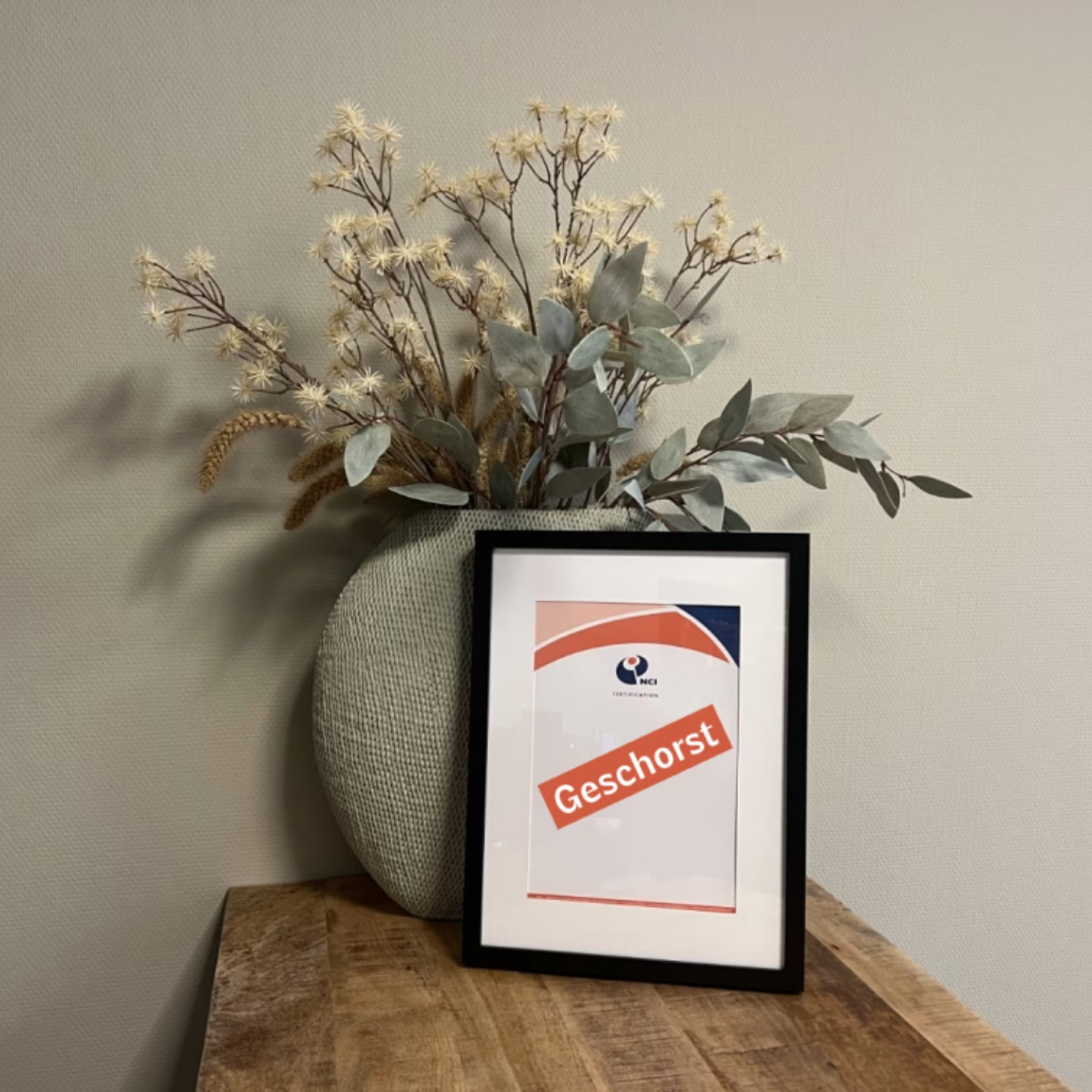

A suspension or revocation can have direct consequences for your business operations, customer relationships and contracts. In this article we explain what causes this, what the difference is between suspension and revocation, and how to prevent it.
Why can a certificate be suspended or revoked?
There are several reasons why a certificate can become temporarily or permanently invalid:
- Failure to meet the standard - During an audit, a nonconformity is found that is not resolved within the agreed upon timeframe.
- Structural non-compliance with safety regulations.
- Expiration of certificate - Certificates have a limited validity. If a recertification is not performed on time, the certificate automatically expires.
- Deception or fraud - For example, giving false or incomplete information during audits.
What is the difference between suspension and revocation?
Suspension means that your certificate is temporarily invalid. Your organization is then given a limited period of time to correct the detected nonconformity.
Revocation means that the certificate expires permanently. In this case, the entire certification process must be gone through again.
Avoiding a suspension or revocation?
To prevent your certificate from being suspended or revoked, it is important to continuously work on compliance with the standard. In the unlikely event that a deviation is found during the audit, you have a predetermined period of time to resolve the deviation without any consequences. Prevent a suspension and/or revocation then by making improvements within the set period and providing documentation and evidence to complete the deviation positively.
Do you have questions about a suspension or revocation?
Contact us at [email protected] or call 0181-481949. We will be happy to look with you.