Accessibility links Skip to main content

2025 EU MRV, EU ETS & FuelEU Maritime Verification Season: Lessons from the Verifier's Perspective

The 2025 compliance season was another milestone for us at Normec Verifavia. As the maritime industry continued adapting to the evolving EU MRV, EU ETS and FuelEU Maritime frameworks, we worked closely with operators to ensure accurate, compliant and timely verification of their emissions and compliance reports.

Continue reading
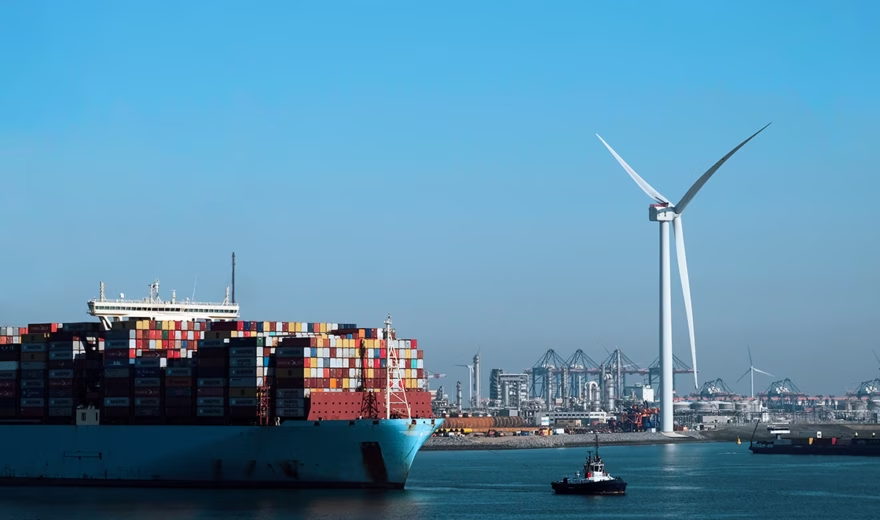
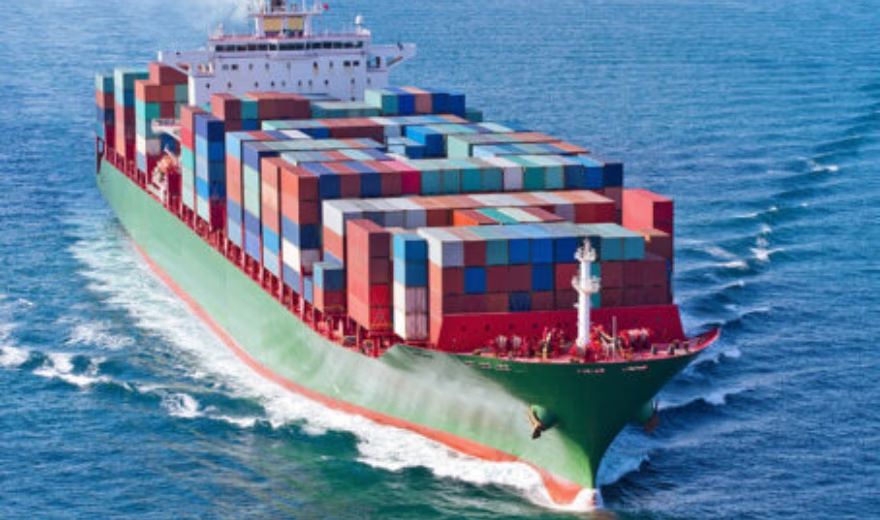
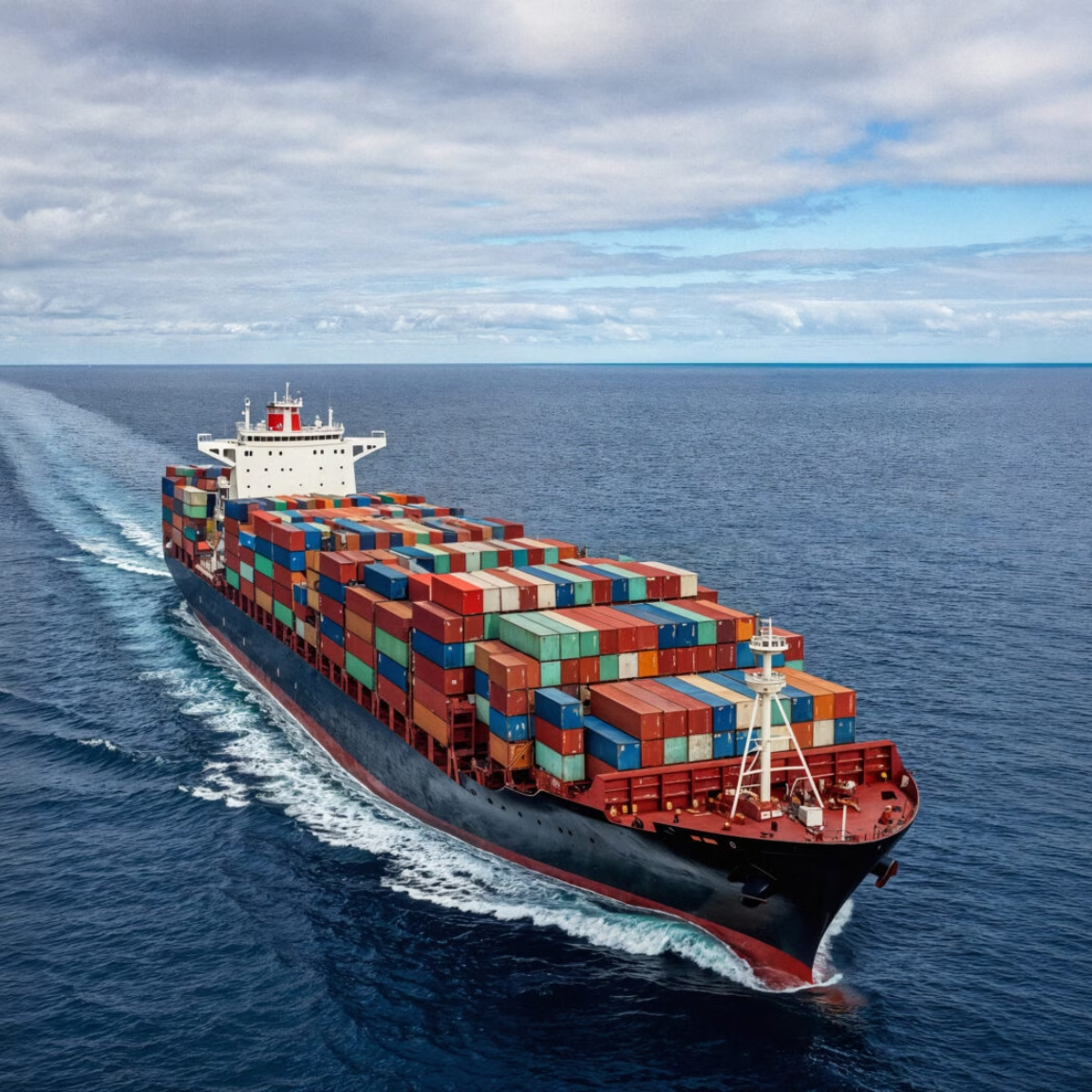
Large container ship sailing across open water with stacked cargo containers on deck, representing global logistics, maritime transport, supply chain operations, and international trade.

2025 Verification Season in Numbers 

During the 2025 reporting season, we successfully completed: 

  • 1300+ EU MRV & EU ETS verifications 
  • 1300+ FuelEU Maritime verifications 
  • 200+ EU MRV verifications for vessels below 5000 GT 
  • Verification of over 15,000 Ro-Pax voyages on THETIS  

Completing more than 2,800 verification engagements across EU MRV, EU ETS and FuelEU Maritime provided us with a unique perspective on the industry’s first full compliance season. Beyond completing a large volume of verifications, the season provided valuable insights into the practical challenges faced by operators and highlighted areas where regulatory awareness can be further strengthened ahead of the next reporting cycle. 

Improving Biofuel Sustainability Compliance 

During the early implementation of FuelEU Maritime, one recurring challenge was several operators using biofuels were unaware of the requirement to provide valid Proof of Sustainability (PoS) documentation. This resulted in delays to the verification process. 

Our Resolution: Using our Emissions Dashboard, supported by BDN-based reporting and API-integrated data, we identified missing sustainability documentation during verification. We subsequently guided operators on the applicable ISCC requirements, helping facilitate timely verification while improving awareness for future compliance cycles. 

Managing Ro-Pax Reporting 

Ro-Pax vessels presented some of the most demanding reporting scenarios, driven by Dual-Fuel operations, Bio-LNG usage, OPS and the sheer volume of annual voyages. Under FuelEU Maritime, mandatory reporting of all voyages and port calls further increased the reporting complexity & the operators IT systems often provided only limited voyage-level data. 

Our Resolution: We worked closely with operators to streamline the reporting process, by guiding them on preparation and validation of multiple sequential XML submissions. This ensures that the full annual dataset was accurately incorporated. For Dual-Fuel and Bio-LNG scenarios, we provided additional guidance on the reporting of fuel consumption and OPS-related data, helping operators align their submissions with the applicable EU ETS and FuelEU requirements 

Derogations and Exemptions: Bridging the Knowledge Gap 

We observed that many operators were unfamiliar with the different derogations and exemptions available under EU ETS and FuelEU Maritime, particularly where their applicability differs between the two regulations. This often led to incorrect or missed declarations in THETIS, impacting emissions calculations and compliance results. 

Our Resolution: With our continuous verification process through our Emissions Dashboard, we assessed the eligibility of applicable derogations and identified instances where they had been incorrectly applied or overlooked. We proactively guided operators on the correct regulatory interpretation and application in THETIS, while raising awareness for accurate reporting in the future. 

ISO Certified Fuel Classification 

Fuel classification was another area with inconsistencies. Operators often classified fuels primarily based on sulphur content, whereas EU ETS and FuelEU Maritime calculations require fuel segregation based on viscosity in accordance with the applicable ISO fuel standards. Incorrect classification could directly affect emissions calculations and compliance outcomes. 

Our Resolution: Leveraging our API-enabled data validation with BDN-based reporting, we efficiently identified fuel segregation discrepancies during verification. We reviewed the reported categorisations, directed corrections where necessary & guided operators towards the correct classification methodology. 

THETIS Platform Updates During the Reporting Cycle 

During the reporting season, updates to the THETIS platform affected the calculation of GHG intensity and FuelEU compliance balances for Ice Class IA and IA Super vessels. Additional changes to decimal rounding methodologies also created reconciliation differences between operator submissions and verified values. 

Our Resolution: To remain aligned with the latest THETIS and EMSA updates, we promptly incorporated the revised calculation methodologies into our internal verification tools and digital verification platform. We subsequently recalculated and revalidated the affected reports, ensuring that the verified results remained fully consistent with the latest calculation methodology. 

Supporting the Expansion of EU MRV 

The expansion of EU MRV to include vessels between 400 GT and 5000 GT introduced new compliance challenges. Operators were unaware that these vessels had entered the scope of the regulation. For offshore vessels, additional uncertainty arose around the regulatory definition of a port of call and the identification of reportable voyages. 

Our Resolution: We assessed vessel applicability on a case-by-case basis, verified voyage eligibility in accordance with the regulation, and provided practical guidance on scope, voyage determination, and the interpretation of port-of-call requirements for offshore operations, enabling operators to report with greater confidence and accuracy. 

FuelEU Flexibility Mechanisms 

One of the biggest learning points for many operators came from their unfamiliarity with the FuelEU Maritime flexibility mechanisms. They were unaware on how these could be strategically applied to optimize compliance. 

Our Resolution: Throughout the verification process, we guided operators on the regulatory implications and suitability of the available flexibility mechanisms for their vessels. Leveraging our familiarity with numerous pooling platforms, we helped operators better understand surplus, deficit, banking and pooling options reducing their overall compliance costs. 

Do you want to create a safe and healthy work and living environment?

We test, inspect, and certify so that organizations can innovate safely, quickly, efficiently, and cost-effectively.

Request a quote

Fill out the form and we will contact you shortly.

Name
In which country would you like the service to be carried out?
Privacy Policy 

Contact us

Fill out the form and we will contact you shortly.

Name
In which country would you like assistance?
Privacy Policy 

Related news articles

19 May 2026

FuelEU Maritime - Compliance Steps for Ship Operators

FuelEU Maritime is a crucial regulation aimed at decarbonizing the maritime industry, in line with the EU’s overarching climate goals. This guide provides in-depth insights and specific operational details that are essential for shipping companies to effectively ensure compliance and strategically plan their operations.
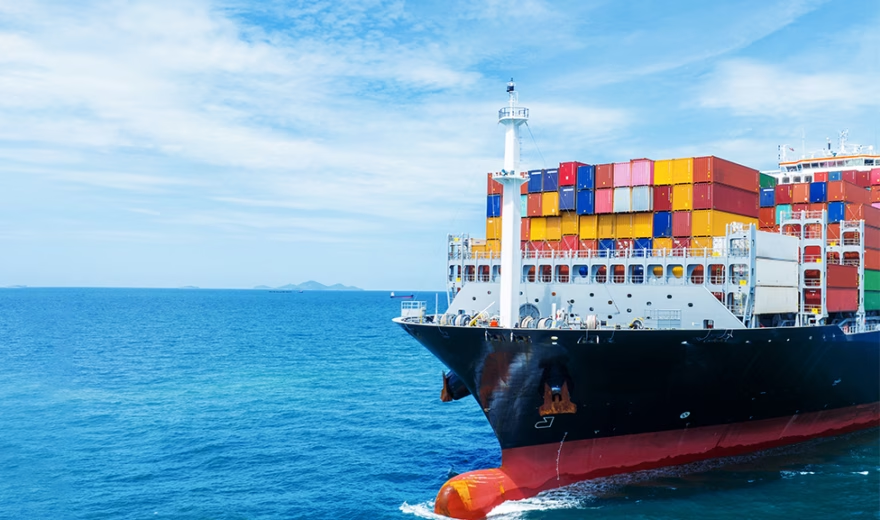
A large container ship carrying colorful shipping containers sailing on the open sea. The image depicts international logistics, transportation, and global supply chains.
23 Aug 2024

Penalty calculations under FuelEU Maritime

The FuelEU Maritime regulation is designed to reduce greenhouse gas (GHG) emissions from the maritime sector by imposing strict GHG intensity limits and shore power requirements for ships with gross tonnage over 5,000 tons carrying commercial passenger or cargo traffic. The GHG intensity limit, expressed in grams of CO2 equivalent per megajoule (gCO2 eq/MJ), will be progressively tightened, targeting an 80% reduction by 2050 from a baseline of 91.16 gCO2 eq/MJ. Specific annual reduction targets are set at 2% for 2025, 6% for 2030, 14.5% for 2035, 31% for 2040 and 62% for 2045.

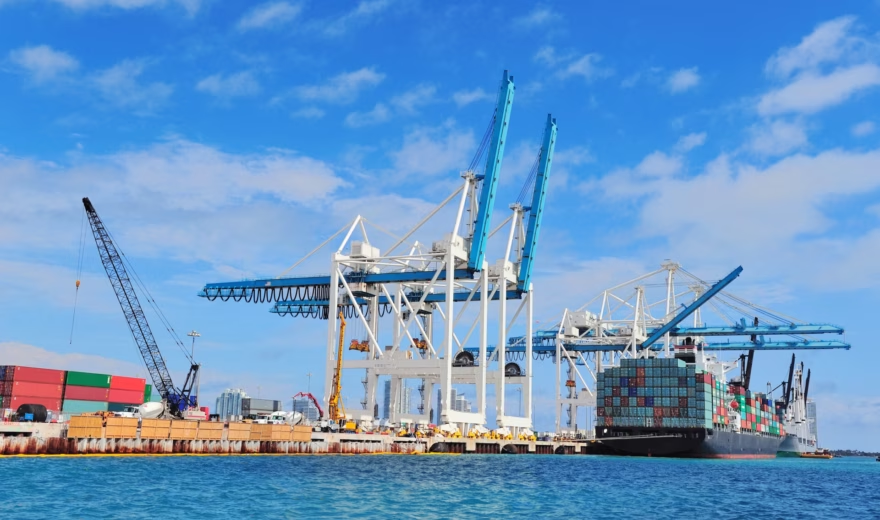
A container ship is docked at a container terminal where cargo containers are being loaded and unloaded.
17 Jul 2026

UK ETS Maritime - The Regulatory Plan

The maritime sector is heading into a highly fragmented era of emissions standards. Following the phased introduction of the EU Emissions Trading System (EU ETS), the British government will officially expand the UK Emissions Trading System (UK ETS) to include the shipping sector as of July 1, 2026.

17 Dec 2024

Flexibility mechanisms under FuelEU Maritime - Banking, borrowing and pooling.

The FuelEU Maritime regulation is a cornerstone of the European Union's Fit for 55 package, aimed at significantly reducing greenhouse gas emissions from the maritime sector. Starting January 1, 2025, this regulation requires all commercial vessels with a gross tonnage of more than 5,000 operating in EU waters to gradually reduce their greenhouse gas intensity, with specific targets for every five years until 2050. The regulation uses a comprehensive well-to-wake approach, taking into account emissions throughout the fuel's life cycle, including extraction, production and consumption.

Sign up for the newsletter

Stay up to date on the latest news, exclusive updates, and valuable insights.

Sign up

Fill in the form and you’ll receive our newsletter shortly.

Naam
Privacy Policy 

Related services

A container ship is being loaded or unloaded at a container terminal equipped with cargo cranes in the port.

FuelEU Maritime Training

Close-up of professionals reviewing documents and making notes during a business meeting, with laptops, paperwork and pens on a desk. The image represents reporting, documentation, quality assurance, compliance and collaboration.

EU MRV & ETS Emissions Report Verification

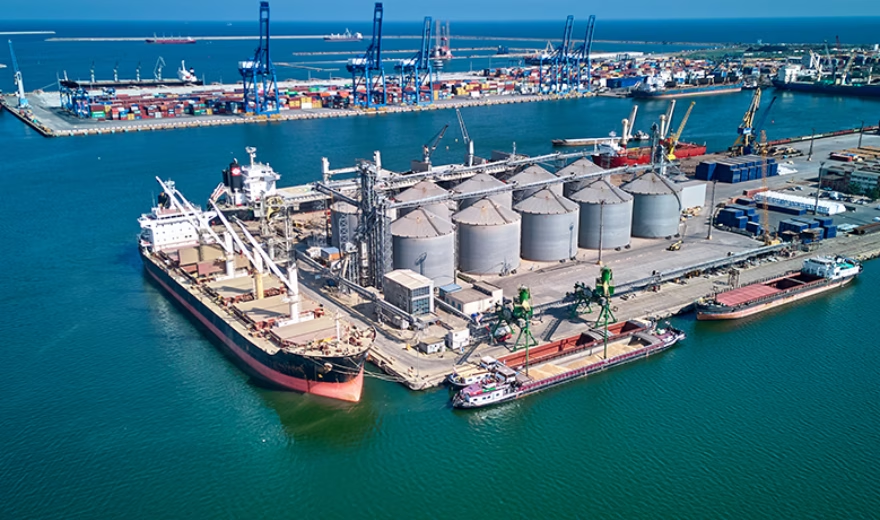
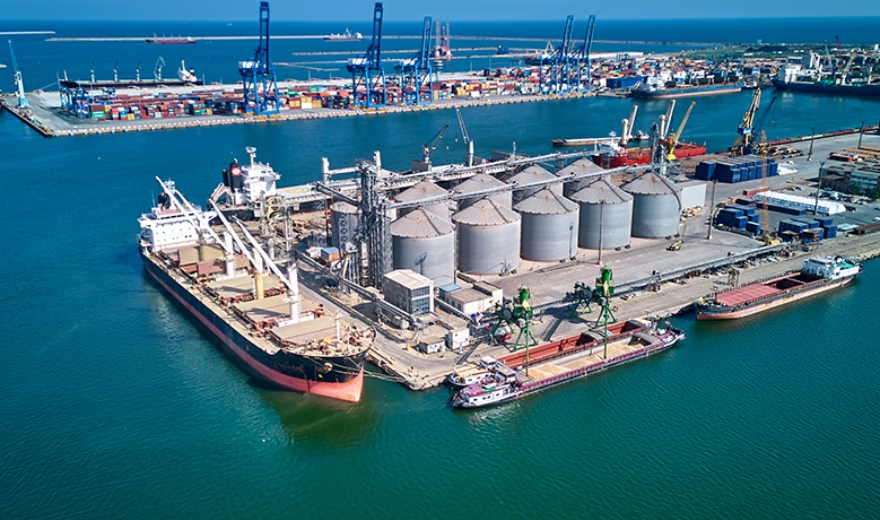
Aerial view of a bulk cargo terminal with grain silos, cargo vessels, cranes and port infrastructure. The image illustrates maritime logistics, storage, handling and transportation of dry bulk commodities.

EU MRV & ETS Monitoring Plan Assessment

Large container ship carrying stacked shipping containers across open water, representing international trade, maritime logistics, transportation, supply chain management and compliance in global shipping.

Shipping Emissions & Performances