Accessibility links Skip to main content

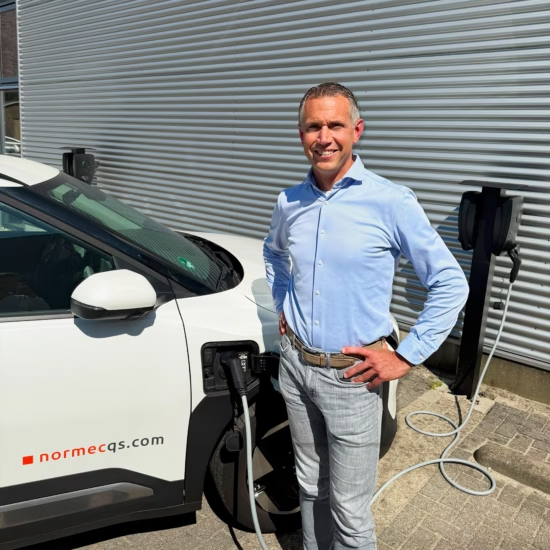
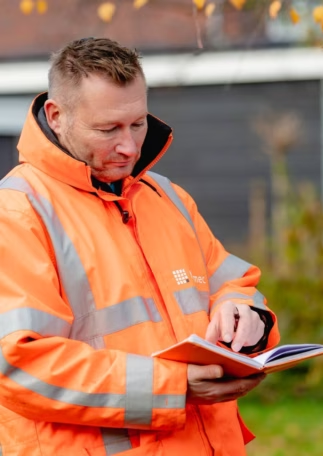
Jorn Bronsvoort on the “new” ERE market: We work alongside the registration service provider, from registration to approval.

"We want to help and support registration service providers so they’re well-prepared for the verification process."

Continue reading
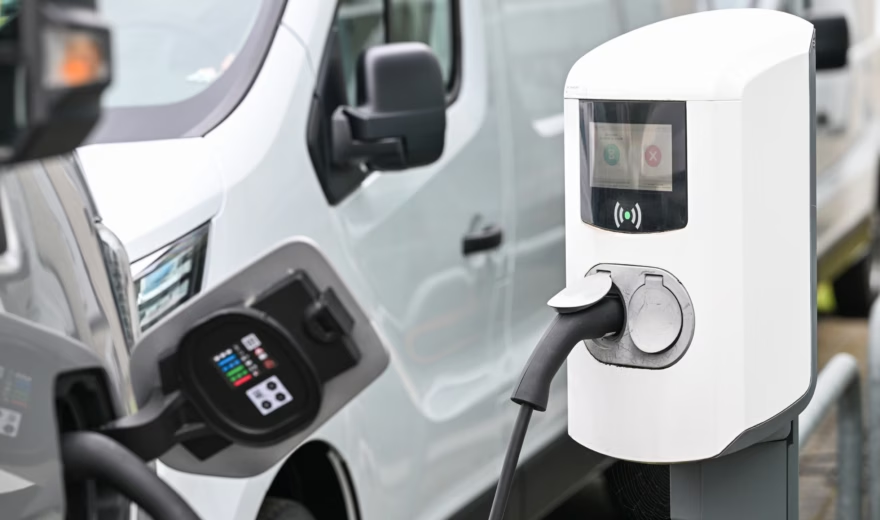
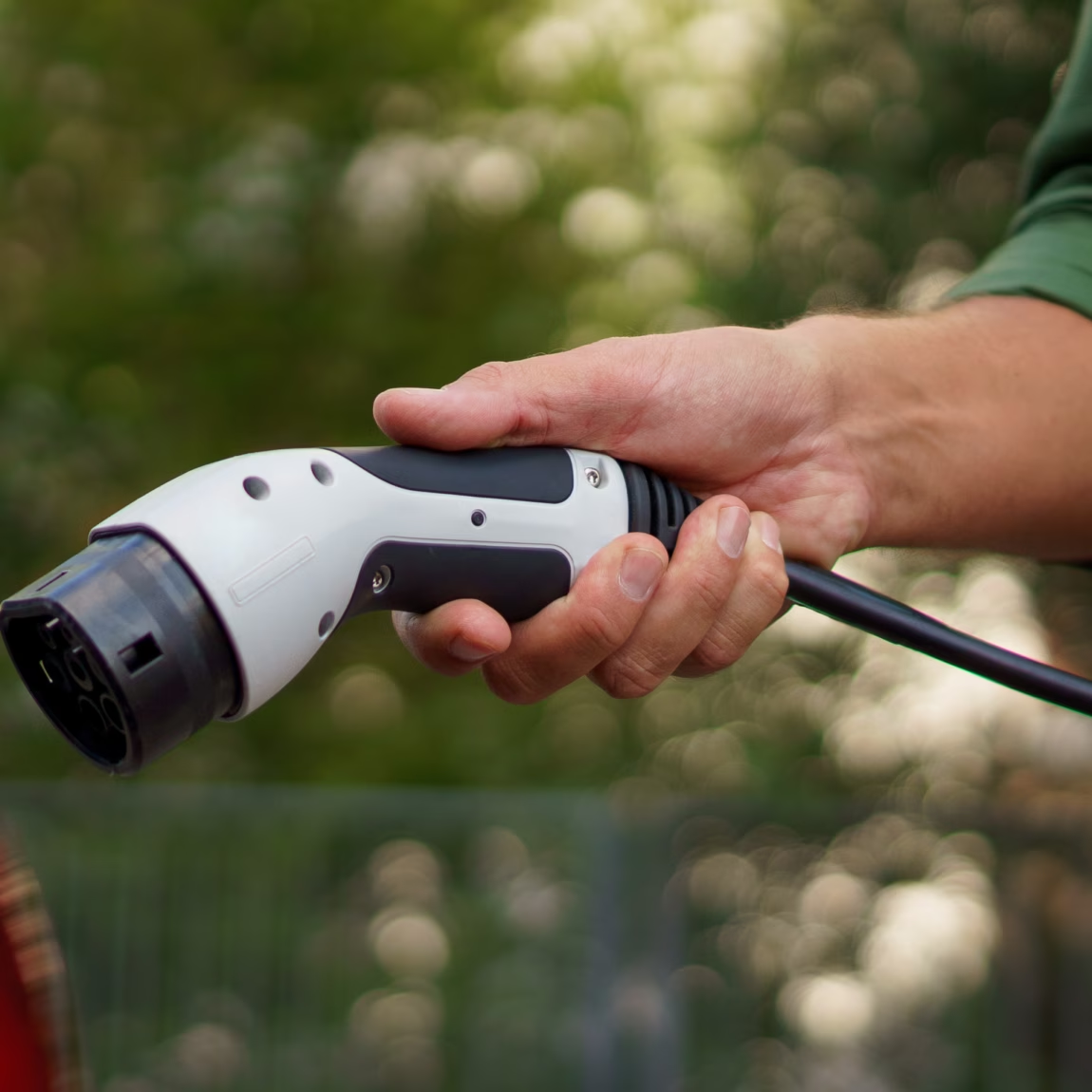
A man holding power supply cable at electric vehicle charging station, closeup

The market is changing

Since January, private individuals and small businesses have also been able to participate in the ERE market, the system that rewards the greening of transportation. For the data entry service providers who enter the volumes for these parties, this means an annual data entry verification. Jorn, Technical Director at Normec QS, notes that questions about this are pouring in.

“This is truly a whole new market that’s emerging,” says Jorn. Whereas previously it was mainly larger companies with many charging stations that submitted their own data, now smaller companies or individuals who charge their cars at home can also have the kWh they’ve used recorded. These target groups do not handle this themselves but through a data reporting service provider. “The service provider collects data from its customers, reports it collectively, and returns a portion of the revenue to them.”

At theForefront of New Regulations

New legislation often raises questions—especially when rules are amended and sometimes even applied retroactively. “The market is really feeling its way,” says Jorn. Organizations are seeking clarity: exactly what obligations apply, and what steps must be taken to comply?

By closely monitoring and providing input during the development of laws and regulations, we maintain up-to-date knowledge of the requirements and their practical application. “This allows us to inform organizations early on about the implications of new regulations and how we will need to conduct audits in response.”

As an independent verifier, we remain strictly separate from advisory activities, but we can clearly explain which requirements apply and what documentation is needed for a successful verification. This way, organizations know where they stand in advance and can properly prepare for the verification process and look forward to it with confidence.

Why use a basic service package?

To support registration service providers, Normec QS has developed a special service package consisting of 6 steps.

“We deliberately chose a step-by-step approach,” explains Jorn. “The legislation is new, there are still many questions from the market, and organizations are at different levels of maturity. That’s why we often start with an introductory meeting (Step 1) in which we explain the verification process and the specific requirements relevant to the organization.”

Ongoing communication throughout the process is also a key component of the service package.
According to Jorn, the greatest added value lies not only in the final verification, but precisely in the period leading up to it.

"Many organizations need an independent expert who can identify the requirements that must be met when setting up their processes and record-keeping. That is why we offer multiple technical consultation sessions (Step 2) throughout the year." “These consultation sessions are intended to provide organizations with certainty—not by offering a preliminary judgment on the outcome of a verification, but by providing timely insight into areas of concern and requirements. This allows organizations to make adjustments where necessary before the formal verification takes place.”

An important part of the approach is the pre-verification (Step 3)."During a pre-verification, we assess the booking service provider based on their working methods, administration, and registration system; we address any complex technical situations; we evaluate the structure of data flows; and we verify compliance with the NEa’s other technical requirements. “This takes place before the formal verification,” says Jorn. “This allows any shortcomings to be identified early on, giving an organization sufficient time to implement improvements.”

This preparatory phase is followed by the formal verifications. “The system verification (Step 4) focuses on whether the processes and internal controls meet the specified requirements—in short, how reliable is the system? Next, during the data verification (Step 5), we check whether the data entered into the REV is accurate, complete, and substantiated.”

After completing the system and data verification, the final step follows: reporting and issuing the statement and approval in the REV (Step 6). A successful entry verification does not end with the review of the data, but with a well-substantiated statement and the timely recording of the findings in the REV."

A Strong Foundation for the Coming Years

The current regulation is valid for the next 5 years. “That is precisely why it is important to set up processes, systems, and documentation properly from the start,” he says. Many organizations are still in an exploratory phase and are seeking answers to questions such as: “How do I set up this system so that it will pass the verification process successfully?”

Thanks to our early involvement in the development of laws and regulations and years of experience in the field of electricity metering verifications, Normec QS possesses in-depth knowledge of both the legal requirements and their practical implementation. “We’re really trying to position ourselves as a pioneer in this area,” says Jorn. “Of course, the goal is to lead the way ourselves, but perhaps even more so to offer our customers peace of mind and, therefore, certainty.” A well-thought-out approach from the outset prevents unnecessary adjustments later in the process. By taking the applicable requirements into account from the start, organizations create a solid foundation for future verifications and minimize the risk of discrepancies.

Practical Insights

Although the first mandatory verifications will not take place until 2027, Normec QS advises organizations not to delay their preparations. According to Technical Director Jorn Bronsvoort, initial experiences from the market are a key reason for this.

“Although the role of registration service provider is still relatively new, we have already begun working with several organizations to prepare them for future registration verification. In doing so, we’ve noticed that companies need clarity, practical support, and a partner who thoroughly understands the regulations.”

Prepared for Tomorrow’s Energy Sources

The energy transition goes beyond electric charging alone. Green gas, hydrogen, and other renewable energy carriers are also playing an increasingly important role in Dutch and European sustainability policy. These developments bring new opportunities for generating and verifying renewable energy units. “I especially expect hydrogen to experience significant growth in the coming years.” This is because the use of hydrogen in mobility will increase in the coming years, and consequently, so will the number of credits registered. “In principle, every hydrogen refueling station in the Netherlands can already start generating EREs,” he says.

According to Jorn, that is also the very essence of his role. “You can only be a pioneer if you have the right focus and knowledge.” By building expertise early on regarding new laws and regulations, we can support organizations in addressing today’s challenges and seizing tomorrow’s opportunities.

Want more control over your bookkeeping verification? We’d be happy to help you get started.

Avoid surprises during your bookkeeping verification. Discuss your situation with one of our experts.

Related news articles

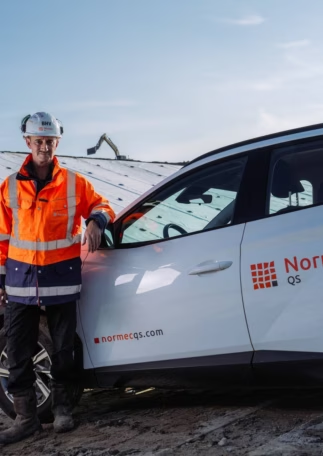
An inspector is standing next to a service vehicle at a location where inspection and monitoring activities are taking place.
13 May 2026

Certified green hydrogen thoroughly verified by Normec QS

At Normec QS, we are proud of our customer Nobian, who became the first large-scale producer in Europe (>100 MW) to achieve ISCC EU certification for non-organic renewable fuels (RFNBO). A milestone that advances not only their team, but the entire renewable fuels industry.

13 May 2026

Leader in RFNBO certification

The market is awaiting official recognition of certification schemes for Hydrogen, also known as Renewable Fuels of Non-Biological Origin (RFNBO), by the European Commission (EC). Normec has actively anticipated this recognition and is already verifying and certifying Hydrogen and RFNBO in several countries. Normec QS in the Netherlands, Normec Zertifizierung in Germany and Normec Verifavia in France have all been working on Hydrogen and RFNBO verification and certification in their own way in recent years. They work together and share their knowledge within the Normec Verification & Compliance Service Line, led by Managing Director Iljo Fluit.

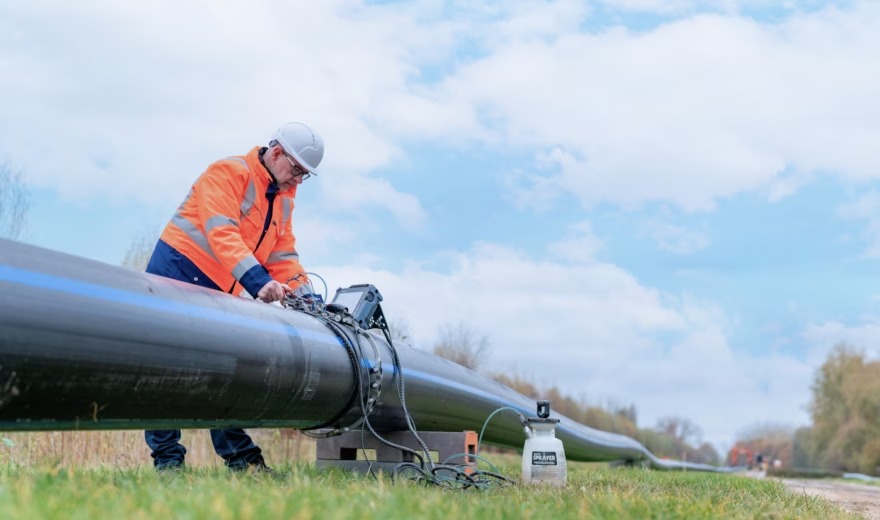
A technical staff member is taking a measurement on an aboveground pipeline using portable measuring equipment outdoors.
13 May 2026

Technical service life of PVC pipes

The usefulness and necessity of a comprehensive condition assessment of PVC pipes There certainly is. A large proportion of underground PVC pipes are already quite old and are approaching the end of their technical service life in the coming years. This depends on many factors, such as the environment, as well as the quality of the pipes and how long they have been in the ground. Every year, failing pipes cause water waste and damage to infrastructure that leads to prohibitively expensive repairs. A shame, right?

13 May 2026

Green gas production certification

Green gas is gaining popularity as a renewable energy source, and for farmers, mono-manure fermentation is an attractive way to produce this gas. In mono-manure fermentation, only animal manure is fermented to produce biogas, which is then upgraded to green gas. To ensure that the gas produced meets sustainability standards, certification is essential. Normec QS supports farmers in this process by certifying their green gas production according to standards such as ISCC and Better Biomass (NTA 8080).

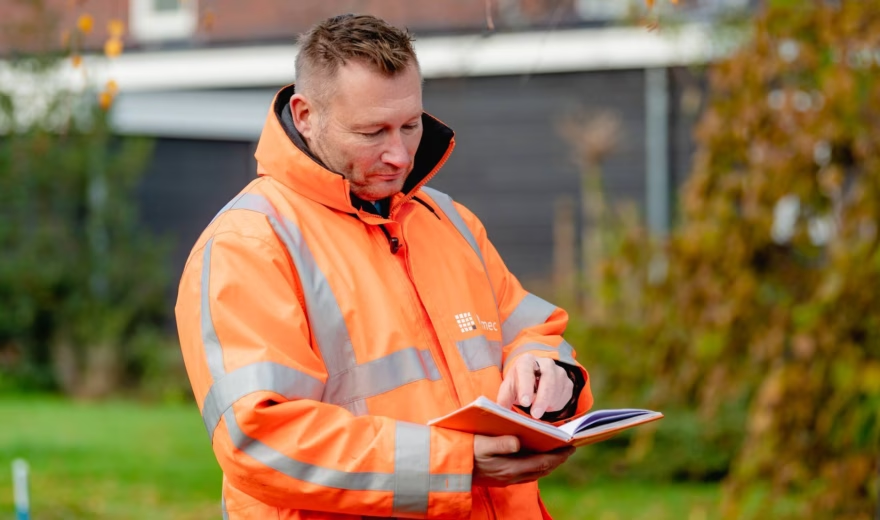
An employee wearing reflective safety clothing records inspection data on a tablet during an on-site inspection.
13 May 2026

Demonstrated compliance with laws and regulations

Managers of IBC works are obliged to maintain the isolating construction, to monitor it and to report periodically to the competent authority. (Periodic) inspections may only be carried out by an accredited and ministerially recognized inspection body. Make sure that you as manager report periodically.

A young green plant growing out of fertile soil with sunlight in the background, symbolizing growth and sustainability.
13 May 2026

Perform verification

Pilot verifications with CO2 calculation tool green waste Commissioned by the BVOR, QS has carried out several pilot verifications for validation according to the new BVOR verification protocol and the updated CO2 calculation tool for green waste. If you want to receive CO2 certificates based on the verified results from the calculation tool, QS as a recognized and fully independent party can perform the verification for you.

13 May 2026

Accreditation achieved

Companies that supply hydrogen through metered delivery points for transport in the Netherlands can green these supplies through 'guarantees of origin for other gas from renewable sources' (hydrogen GVOs). When booked correctly, they receive HBEs in their account in the Energy for Transport Register (REV).

Sign up for the newsletter

Stay up to date on the latest news, exclusive updates, and valuable insights.

Sign up

Fill in the form and you’ll receive our newsletter shortly.

Naam
Privacy Policy 

Related services

An electric delivery van is being charged via a charging cable connected to a charging station.

ERE registration verification

A young green plant growing out of fertile soil with sunlight in the background, symbolizing growth and sustainability.

Better Biomass certification

RED II verification for SDE and EU ETS.

ISCC certification

A young green plant growing out of fertile soil with sunlight in the background, symbolizing growth and sustainability.

SMK Ecolabel

CO₂ reduction verification

BVOR CO₂ calculation tool